LEARNING

Program Results
We measure every student with the same standardized assessments before and after instruction, and we monitor progress between. The numbers below come from those measures, with the cohort, the skill measured, and the timeframe attached.
Summer LEAP 2025 outcomes
22 learners, 6 to 8 weeks of daily one-on-one intervention, measured by the same standardized assessment before and after. An average intensive round is 90 to 120 hours of direct instruction. Individual results vary.
Results by skill area
The data below represents pre- and post-assessment results for students who completed a round of intensive, one-on-one structured literacy intervention at Pine State Learning. An average round of intensive intervention is between 90 and 120 hours of direct instruction, typically delivered over the course of several months at high frequency (so 2-4 hours daily).
Results are grouped by the skill area assessed and anonymized to protect student privacy.
Sight Word Recognition
Word recognition, measured by the Slosson Oral Reading Test, reflects a student's ability to read real words in isolation and is reported as a grade-level equivalency.
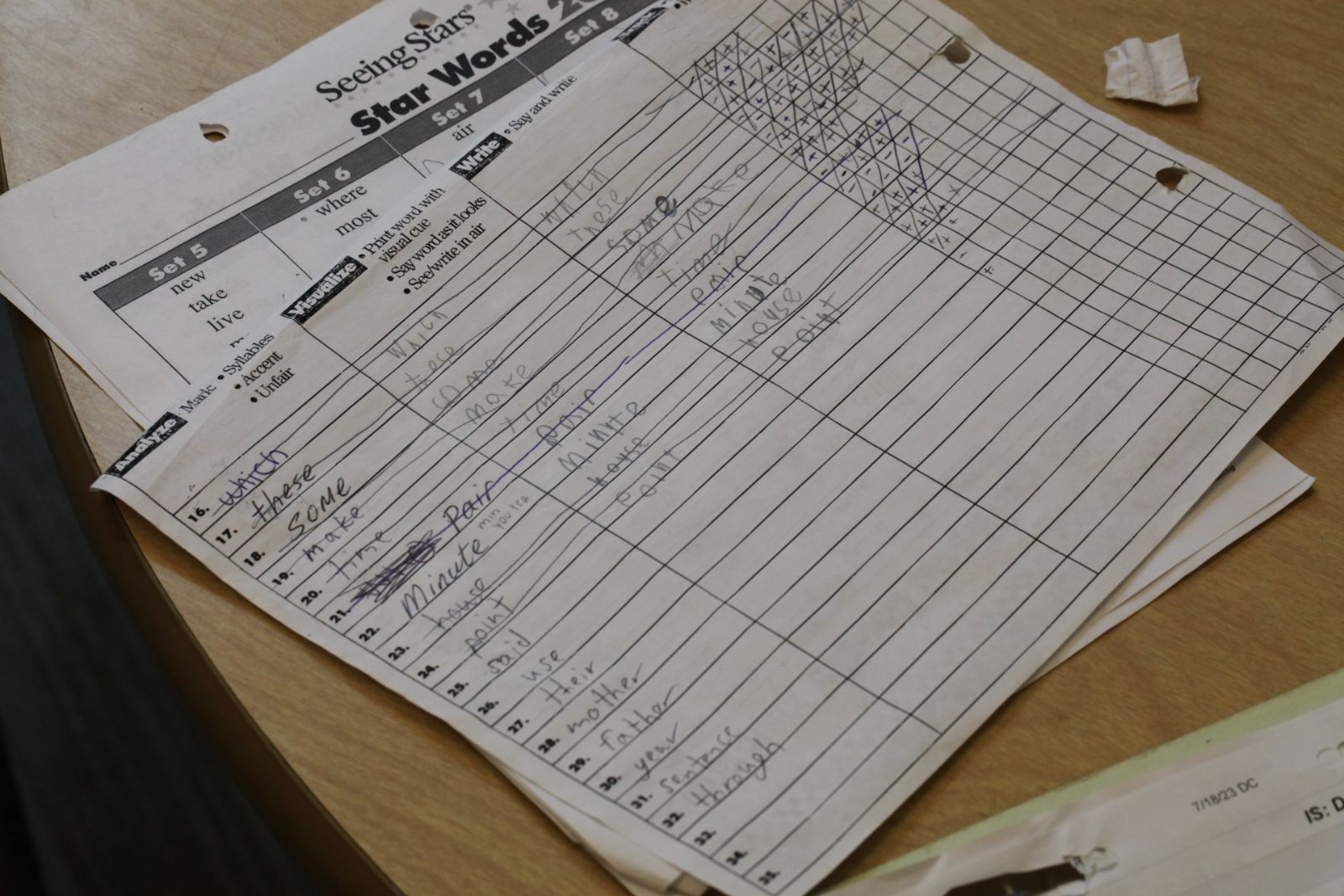
With one round of intensive instruction, our students gained nearly two grade levels in sight word recognition. Incorporating direct orthographic instruction from the beginning of instruction makes a huge difference in how quickly word recognition automaticity and word reading fluency develop. Incorporating multi-sensory instruction that targets visual working memory with airwriting is the foundational difference in our instruction.
Many students leave YEARS of tutoring only to be good decoders, with strong phonological awareness but limited sight word automaticity and oral reading fluency gains. Incorporating multi-sensory strategies that support orthographic processing early, right from the beginning of instruction, makes a huge difference in sight word recognition and oral reading fluency for our students.
Tapping or "finger spelling" are multi-sensory strategies that reinforce phonological awareness, and sound by sound, decoding. While they create fast decoding gains at first, they can limit overall sight word gains. Air-writing, challenges the visual working memory (orthographic processing) and builds our learners' phonological awareness and orthographic processing simultaneously; just the way their brains use them when reading fluently. We have taught students both ways, and see the huge difference this step makes.
Oral Reading Fluency: Correct Words Per Minute
Oral reading fluency measures reading rate alongside accuracy. A student who reads 40 cwpm is working so hard to decode each word that comprehension becomes nearly impossible. Research suggests 90+ cwpm at grade level is the threshold where reading begins to feel automatic enough to support understanding. That is why we incorporate oral reading as early as we can and practice with both decodable and organic text.
Decoding
Decoding is the ability to translate written symbols into spoken language. It is the fundamental mechanical skill of reading: without it, a student is guessing from context and memory rather than truly reading. Decoding assessment uses nonsense words and increasingly complex syllable structures to determine whether a student has internalized the code, not simply memorized familiar words.
The students below arrived unable to decode beyond the simplest word structures. Through systematic instruction, they built the skill set to attack unfamiliar words independently, an ability that transfers to every word they will ever encounter.
Decoding is a foundational step in learning to read for our students but it is just one part of the hierarchy of reading that we use to identify student needs, design learning plans, and monitor over the course of instruction.
Phoneme-Grapheme Mastery
English has approximately 50 phoneme-grapheme correspondences: the relationships between sounds and the letters or letter combinations that represent them. Mastery of these correspondences is what allows a reader to decode and encode any regular English word. Students are assessed on all 50 correspondences at intake and again at post-test.
Phoneme-grapheme automaticity is the first step in becoming a fast and automatic decoder. Our students need to know the sounds for these graphemes as fast as they know their names. They are the building blocks for all other literacy.
Why we target orthographic processing early
Orthographic processing is the brain's ability to store and recall the letters and letter patterns that make up written words. Orthographic mapping means the brain is learning to store words accurately and automatically, so reading stops feeling like a guessing game.
Many of our students arrive with strong phonics knowledge but weak orthographic skills: they can sound out a word five times in a row and still not recognize it the sixth time. Targeting orthography directly is often the missing step, and it changes how quickly word recognition and reading fluency develop.
Instructional data
Progress monitoring means brief, frequent checks of the exact skills being taught, so instruction can be adjusted week to week rather than discovered to be off-track months later.
Families see the same data we do: current level, target level, and the trend line between them, for each skill on the individualized learning plan.
What educators and families report
"I have seen tremendous growth in students who have worked under Lisa Murphy's direction. Students have improved multiple grade levels and their confidence has skyrocketed."
"Lisa is incredibly knowledgeable in designing reading interventions and instruction for students with learning disabilities. As a special education teacher, I refer to her for some of my most difficult cases."
Start with a free 15-minute consultation.
This quick conversation helps us hear your concerns and guide you to the next steps. We will get you set up to start tutoring, an independent academic evaluation, or a home learning kit, or send you to the professionals who can help if we cannot. If asynchronous works better for your schedule, please feel free to send an email with your initial questions.
We are committed to working against the way that racial and socioeconomic privilege manifests itself in the identification and remediation of learning disabilities.
We do what we can by offering need based scholarships, providing services in some of Maine's lowest resource schools, and working pro-bono with grant based educational advocates for Maine's most economically disadvantaged students with the toughest cases. This is how we do what we can to help ALL students get what they need.